

Announcing Africa-Based Winners of Re:Paris Prize
September 10, 2026
Van Alen Institute and Pan-African Biennale Announce Africa-Based Winners of the Re:Paris Prize
Arafa C. Hamadi and Bled el Abar Collective receive travel fellowships to research transformative design grounded in African practice
Call for US-based winner now open

September 10, 2026 — Brooklyn and Nairobi — Van Alen Institute and the Pan-African Biennale are pleased to announce Arafa C. Hamadi and the Bled el Abar Collective as the two Africa-based winners of the 2026 Re:Paris Prize.
The prize’s travel fellowship supports emerging designers as they conduct field research to study how design plays a transformative role in Africa and its diaspora — places once held to the periphery of architectural discourse, but are now increasingly appreciated as centers of innovation in sustainability, resiliency, and cultural preservation. Following their research, the winners will present their learnings at Van Alen in Fall 2027 and the second Biennale in 2028.
An open call for US-based designers is now live on vanalen.org. Applications are due November 22, and one winner will be selected in December 2026.
Arafa C. Hamadi | Who Designs Knowledge?
Galleries and museums across Sub-Sahara Africa are increasingly adopting the language of decolonization, yet exhibition spaces often continue to reproduce Western museological aesthetics. Arafa C. Hamadi’s project Who Designs Knowledge? asks how exhibition design can instead become a tool for building narrative spaces rooted in African aesthetic and material cultures. Through research, institutional visits and engagements with local material practitioners, Arafa will explore and prototype alternative spatial approaches to exhibition-making.
“I am extremely excited to have been selected for this prestigious prize and to expand my research through travel and local collaborations,” said Arafa C. Hamadi. “I believe that African histories and arts should be held within spaces that reflect the cultural stories they tell, and with this support, I look forward to collecting knowledge about indigenous spatial practices that I can bring into the museum and gallery space.”
Bled el Abar Collective | Ifriqya: A Territory of Hospitality
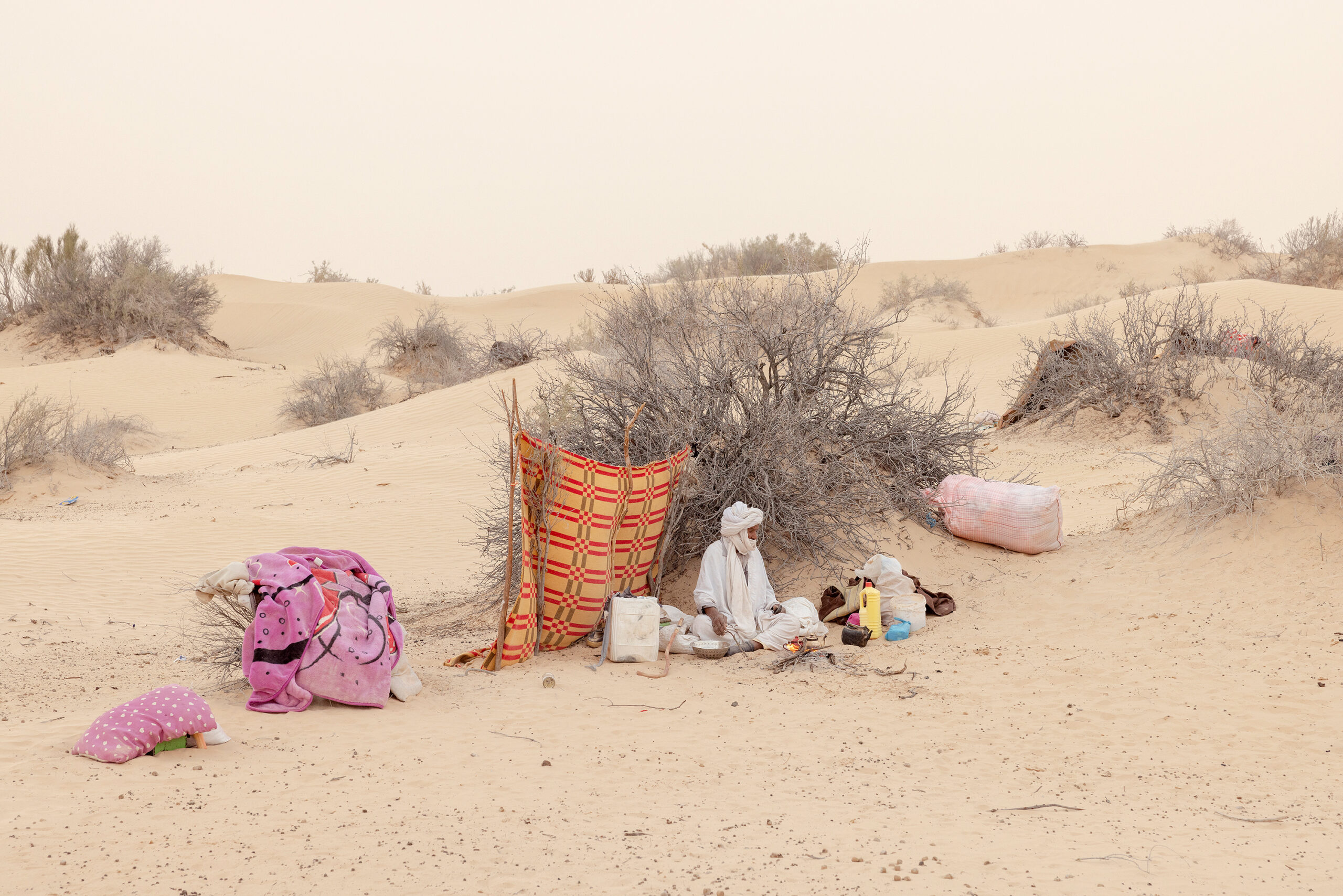
Places of hospitality, including oases, tents, and wells, punctuate the North African Sahara. For millennia, they have been sites of dwelling, gathering, and cultivation; today they are also tangible acts of resistance against colonial legacies, the authority of nation-states, and extractive economic systems. Together with those who live there, the Bled el Abar Collective will map these places, learn their stories, and investigate the contemporary realities they reveal.
“This project describes and puts forward hospitality as a principle in which we — as humans — must consider ourselves guests of the Earth,” stated the Bled el Abar Collective. “Nature, here, is not treated as a resource, but as a complex milieu of interaction between humans and the other-than-human — one we must care for in order to keep it hospitable. This is what we learned from the Tunisian Sahara: a lesson we wish first to reveal through the map, and then to safeguard and strengthen through concrete actions emerging from work with the collectives who live there.”
Winners were selected by jury members Nora Akawi, Assistant Professor, The Cooper Union; Ifeoma Ebo, Founding Principal, Creative Urban Alchemy; Mark Gardner, Principal, Jaklitch / Gardner Architects; Kabage Karanja, Co-Founder, Cave_bureau; and Mphethi Morojele, Managing Director, MMA Design Studio.
“The jury was pleasantly surprised not only by the depth, but the range of submissions,” said Mphethi Morojele. “Submissions ranged from Lesotho in the South to Tunisia in the North, and Van Alen Institute and the Pan-African Biennale are to be congratulated for this. The proposed research topics were all fresh and sought to balance scientific and artistic enquiry in ways that sought to dispel the usual tropes about spatial practice on the continent.”
“The proposal Who Designs Knowledge? meant sitting with the Pan African Biennale’s own premise: Africa is not developing, it’s recovering — from extraction, from colonial violence, from more than a century of being narrated by the outsiders’ gaze,” said Mark Gardner. “We were all supportive of Arafa C. Hamadi’s immersive question on the structural language of design and curation.”
“The Bled el Abar Collective’s Ifriqya: A Territory of Hospitality is a deeply compelling framework to read the Sahara through the Sahara that sits outside historically extractive architectural and cartographic frameworks,” said Kabage Karanja. “It sets out a clear and present methodology to learn from the lifeblood of community and the land, while building a mesmerising repository of knowledge about this enigmatic part of Africa.”
KEY DATES
December 2026 | United States-based winner selected
Fall 2027 | Public presentation of field research at Van Alen Institute
Visit vanalen.org for more information.
About Arafa C. Hamadi
Arafa C. Hamadi is a Tanzanian multidisciplinary artist and spatial designer with a background in architecture. They create both physical and digital work, aiming to realise fully immersive spaces that explore their identity in relation to their locality and the built environment, focusing on joy and tangible ways of connecting their community. Their current explorations are in exhibition design, having supported in the design for two major exhibitions at the Zeitz MOCAA in South Africa. They have also worked in scenography, 3D/VR work, installation art, and audiovisual art.
About the Bled el Abar Collective
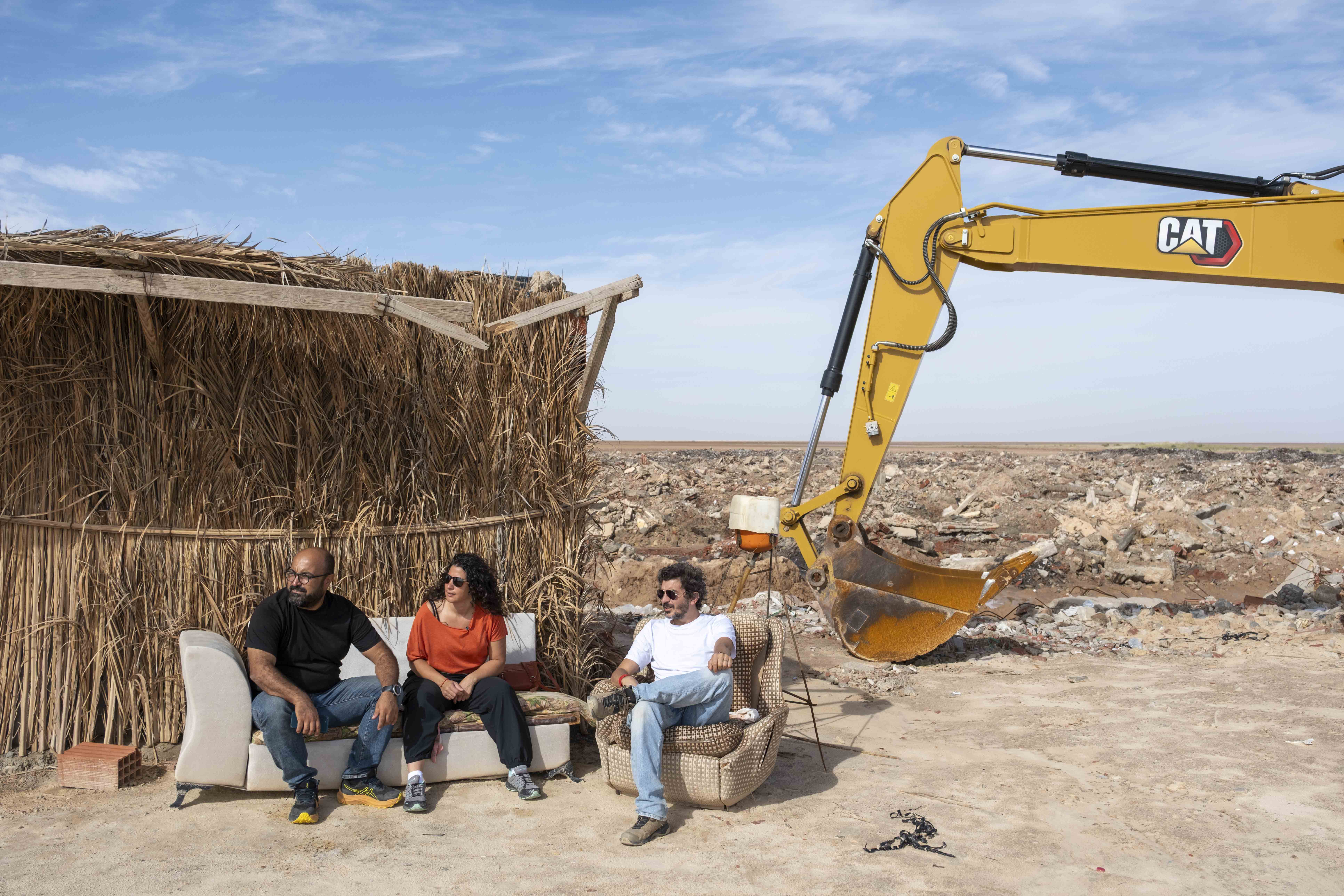
Founded in 2025 by Réunionese architect and landscape architect Vanessa Lacaille, Tunisian architect and journalist Mounir Ayoub, and Tunisian architect and farmer Hamed Kriouane, the Bled el Abar Collective is a nonprofit organization that advocates for experimental, socially engaged, and politically committed architecture, developed with the collectives who live in the territory of the Tunisian Sahara.
About the Re:Paris Prize
In 2026, Van Alen Institute relaunched its long-running Paris Prize in Architecture (1904–97) as the Re:Paris Prize, with a new focus on reparative and regenerative urbanism across the global post-colonial landscape. Inverting the “Grand Tour” tradition, the Re:Paris Prize focuses on regions once held to the periphery of architectural and urbanist discourse. Winning designers receive a travel fellowship to conduct impactful field research, evolve their work to the next phase of development, and meaningfully engage with communities navigating histories of displacement and exclusion.
For the inaugural Re:Paris Prize, Van Alen has partnered with the Pan-African Biennale. Two Africa-based winners were selected from exhibiting designers at the 2026 Pan-African Biennale, and a third US-based winner will be selected through an open call. Following their field research, the three winning designers will present their learnings at Van Alen in Fall 2027 and the second Pan-African Biennale in 2028.
About Van Alen Institute
Van Alen Institute is a driving force behind community-led urban design, which believes that local knowledge and care enrich the design process. Since 1894, Van Alen has invested in people with a passion for improving cities through the power of architecture and design. Our public space projects build unconventional coalitions of designers, local stakeholders, and city leaders, and we support their visions through project scoping, hands-on guidance, and seed funding. From our home in New York City, our work confronts longstanding power imbalances in citymaking, showcases the vanguard of community-led design, and supports the next generation of designers in creating more just cities.
See all work at vanalen.org.
About the Pan-African Biennale
The Pan-African Biennale is the first continental institution dedicated to architecture, urbanism, and spatial practice on the African continent. Conceived, built, and led from within Africa, it marks a decisive moment in the history of global architectural discourse, the moment Africa asserts its own institutional voice, on its own terms, from its own ground. The Biennale convenes practitioners, thinkers, researchers, and communities from all 54 African nations under a single curatorial framework, renewed with each edition. Each edition is hosted in a different African city, ensuring that the institutional center of this discourse moves continuously across the continent.
Learn more at panafricanbiennale.org.
MEDIA CONTACTS
Van Alen Institute
Alisha Kim Levin, press@vanalen.org
Elisa Smilovitz, elisa@elisasmilovitz.com
Pan-African Biennale
Kafia Ahmed, kafia.ahmed@panafricanbiennale.org